

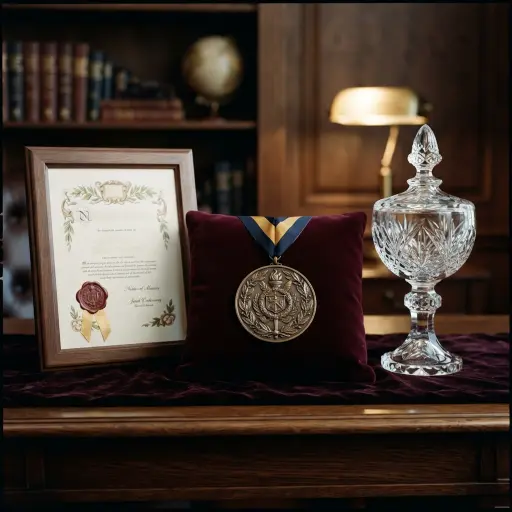
The word award can refer to a prize, honor, recognition, or something officially given to a person or organization for achievement. It can also be a verb, meaning to officially give someone a prize, contract, grant, or other benefit. Because its meaning changes with context, the best alternative depends on what you are describing.
For example, prize works well for a competition, while accolade emphasizes praise or honor. Distinction sounds more formal and often refers to an achievement, whereas trophy usually means a physical object given to a winner. In professional or academic writing, choosing a more precise alternative can make your sentence clearer and less repetitive.
Quick Answer
Common synonyms for award include prize, honor, accolade, distinction, recognition, trophy, medal, commendation, citation, decoration, and laurel. However, these are not always interchangeable. The right choice depends on whether the award is a physical object, an honor, formal recognition, financial support, or an official decision.
Quick List: Synonyms for Award

Here are useful alternatives, grouped by meaning:
Closest alternatives
- Prize
- Honor
- Accolade
- Recognition
- Distinction
- Commendation
- Citation
- Trophy
- Medal
- Decoration
Formal alternatives
- Distinction
- Commendation
- Citation
- Decoration
- Honor
- Recognition
- Fellowship
- Laurels
- Official recognition
Professional and academic alternatives
- Achievement award
- Merit
- Distinction
- Fellowship
- Scholarship
- Grant
- Recognition
- Commendation
- Honor
- Academic distinction
Casual alternatives
- Prize
- Trophy
- Medal
- Win
- Honor
Verb alternatives for “award”
- Give
- Present
- Grant
- Confer
- Bestow
- Allocate
- Assign
- Approve
- Nominate (not an exact synonym)
- Recognize
What Does “Award” Mean?
As a noun, an award is something officially given to recognize achievement, merit, excellence, service, or success.
Example:
She received an award for outstanding performance.
As a verb, award means to officially give something to someone, often after a decision or evaluation.
Example:
The committee awarded the scholarship to Maya.
The word can therefore describe several different things:
- A competitive prize
- An honor for achievement
- A physical trophy or medal
- Formal recognition
- Financial assistance
- A grant
- An official decision
- A contract given to a company
That variety is why there is no single synonym that works in every sentence.
Formal Alternatives to “Award”
1. Honor
Meaning: A mark of respect or recognition given because of achievement, service, or distinction.
Explanation:
Honor is one of the closest alternatives when an award represents respect rather than a competition win. It often sounds dignified and personal.
Example:
The university gave her the highest honor for her years of service.
Best Use: Ceremonies, professional recognition, lifetime achievement, and public service.
Worst Use: A sentence referring specifically to a physical prize.
Tone: Formal, respectful, and prestigious.
2. Accolade
Meaning: An expression or symbol of praise for an achievement.
Explanation:
An accolade highlights praise and recognition. It is common in professional, literary, artistic, and entertainment writing.
Example:
The novel received several international accolades.
Best Use: Journalism, biographies, arts, entertainment, and professional writing.
Worst Use: Situations where you specifically mean money or a physical trophy.
Tone: Formal and polished.
3. Distinction
Meaning: Recognition for excellence or superior achievement.
Explanation:
Distinction often describes a high level of achievement rather than a physical object.
Example:
She graduated with distinction in engineering.
Best Use: Academic and professional contexts.
Worst Use: A sports competition where the winner receives a trophy.
Tone: Formal and academic.
4. Recognition
Meaning: Public or official acknowledgment of someone’s achievement or contribution.
Explanation:
Recognition is broader than award. Someone can receive recognition without receiving a formal prize.
Example:
His research earned international recognition.
Best Use: Professional achievements, research, service, leadership, and public accomplishments.
Worst Use: When you need to identify a specific physical prize.
Tone: Neutral to formal.
5. Commendation
Meaning: Formal praise for good work, conduct, or achievement.
Explanation:
A commendation focuses on approval and praise. It can be an official statement or formal recognition.
Example:
The firefighter received a commendation for his bravery.
Best Use: Public service, workplace recognition, military contexts, and formal writing.
Worst Use: Casual descriptions of a small competition prize.
Tone: Formal and official.
6. Citation
Meaning: An official statement recognizing someone’s achievement, service, or conduct.
Explanation:
A citation can refer to a formal commendation, especially in military, academic, or institutional settings. It can also mean a reference to a source, so context matters.
Example:
The officer received a citation for exceptional service.
Best Use: Military, institutional, academic, and formal recognition.
Worst Use: Informal conversations where readers could confuse it with a source reference.
Tone: Formal and official.
7. Decoration
Meaning: An official medal or honor given for notable service or achievement.
Explanation:
Decoration is a specialized term. It commonly refers to military or state honors rather than ordinary competition prizes.
Example:
She received a national decoration for her public service.
Best Use: Military, government, and national honors.
Worst Use: School competitions or ordinary workplace prizes.
Tone: Highly formal.
8. Laurels
Meaning: Honors or praise earned through achievement.
Explanation:
Laurels is usually figurative. It comes from the traditional association between laurel wreaths and victory.
Example:
The filmmaker earned international laurels for her debut movie.
Best Use: Literary, journalistic, and sophisticated writing.
Worst Use: Simple everyday communication.
Tone: Literary and elegant.
9. Merit
Meaning: The quality of being deserving of recognition or reward.
Explanation:
Merit is not a direct synonym for a physical award. It describes the quality or achievement that may justify an award.
Example:
The committee recognized the project on its merit.
Best Use: Academic, professional, and evaluative writing.
Worst Use: Replacing award when naming an actual prize.
Tone: Formal and analytical.
10. Prize
Meaning: Something given to a winner of a competition or contest.
Explanation:
Prize is probably the closest everyday alternative to award when the item is given to a competition winner.
Example:
She won first prize in the writing contest.
Best Use: Competitions, contests, sports, games, and general conversation.
Worst Use: A sentence about an honor that was not connected to winning a competition.
Tone: Neutral and widely understood.
11. Trophy
Meaning: A physical object presented to a winner as a symbol of achievement.
Explanation:
A trophy is narrower than award. Not every award is a trophy.
Example:
The team lifted the championship trophy.
Best Use: Sports and competitions.
Worst Use: Abstract honors or financial awards.
Tone: Neutral and celebratory.
12. Medal
Meaning: A small metal object given as recognition for achievement, especially in sports or service.
Explanation:
A medal is a specific type of award.
Example:
The athlete won a gold medal.
Best Use: Sports, military service, academic competitions, and public honors.
Worst Use: Awards that have no physical medal.
Tone: Neutral and specific.
13. Fellowship
Meaning: Financial support, a position, or an honor given to someone for study, research, or professional development.
Explanation:
A fellowship can be an award, but it has a specialized purpose. It should not replace award in every context.
Example:
She received a research fellowship from the university.
Best Use: Academia, research, professional development, and scholarship programs.
Worst Use: General contests or entertainment awards.
Tone: Formal and academic.
14. Scholarship
Meaning: Financial assistance given to support a student’s education.
Explanation:
A scholarship can be an award in the broad sense, but it is not a general synonym for every kind of award.
Example:
He received a scholarship for academic excellence.
Best Use: Education and student financial support.
Worst Use: Replacing an award in sports, entertainment, or professional recognition.
Tone: Formal and educational.
15. Grant
Meaning: Money or resources officially provided for a particular purpose.
Explanation:
A grant may be awarded, but grant is not a universal synonym for award. It usually involves funding for research, projects, organizations, or specific activities.
Example:
The university awarded her a research grant.
Best Use: Research, nonprofits, education, government programs, and projects.
Worst Use: General achievement awards.
Tone: Professional and formal.
Semi-Formal and Neutral Alternatives
16. Recognition
Meaning: Acknowledgment of someone’s achievement or contribution.
Example:
The company gave him recognition for his leadership.
Best use: Workplaces, organizations, schools, and public communication.
Tone: Neutral and professional.
17. Achievement
Meaning: Something successfully accomplished.
Example:
Winning the championship was one of her greatest achievements.
Why it differs:
An achievement is what someone accomplishes; an award is what someone may receive because of that accomplishment.
Tone: Neutral and positive.
18. Achievement Award
Meaning: An award specifically given for notable accomplishment.
Example:
She received an achievement award for her contributions to the project.
Best use: Schools, workplaces, clubs, and organizations.
Tone: Professional and clear.
19. Certificate
Meaning: An official document confirming completion, qualification, participation, or recognition.
Example:
Participants received certificates for completing the training.
Why it differs:
A certificate may represent recognition, but it is not necessarily a prize.
Tone: Neutral and formal.
20. Distinction
Meaning: A mark of excellence or superior achievement.
Example:
The student graduated with distinction.
Best use: Academic and professional settings.
Tone: Formal.
21. Commendation
Meaning: Formal praise for excellent work or conduct.
Example:
The employee received a commendation from the department director.
Best use: Workplace, public service, and institutional settings.
Tone: Formal.
22. Recognition Award
Meaning: A formal prize or honor given to acknowledge achievement.
Example:
The organization presented her with a recognition award.
Best use: Corporate, nonprofit, and organizational communication.
Tone: Professional.
Informal and Casual Alternatives
The English language has fewer true informal synonyms for award because the word itself is already neutral. In everyday conversation, people often choose simpler words based on the specific situation.
23. Prize
Example:
I won a prize at the school competition.
Natural use: Everyday conversations about contests.
24. Trophy
Example:
Our team brought home the trophy.
Natural use: Sports and competitions.
25. Medal
Example:
She came home with a medal.
Natural use: Sports, school competitions, and achievement events.
26. Win
Example:
That was his biggest win of the year.
Explanation:
Win describes the successful result, not necessarily the award itself.
Tone: Casual and conversational.
27. Honor
Example:
It was a huge honor to be chosen.
Natural use: Personal conversations, speeches, and social posts.
True Synonyms vs. Contextual Alternatives
Not every word in a synonym list can replace award without changing the meaning. This distinction is especially important in professional and academic writing.
| Type | What It Means | Can It Replace “Award”? |
|---|---|---|
| True/close synonym | A prize or honor given for achievement | Often |
| Near synonym | A related form of recognition | Sometimes |
| Contextual alternative | Works in a particular situation | Only in certain contexts |
| Broader expression | A wider idea such as recognition | Sometimes, with meaning change |
| Narrower expression | A specific type such as trophy or medal | Only when that specific meaning applies |
For example, prize can often replace award in a competition. But trophy cannot replace award if the award is a certificate or cash payment.
Likewise, recognition can replace award when the emphasis is on acknowledgment, but recognition does not necessarily involve a formal prize.
Industry-Specific Usage
Business Writing
In business writing, award, recognition, distinction, and honor are usually safe choices.
Example:
The company received an industry award for customer service.
Possible alternatives:
- The company received industry recognition for customer service.
- The company earned a distinction for customer service.
- The company was honored for its customer service.
The best choice depends on whether an actual prize was given.
Corporate Communication
Corporate announcements often use recognition, honor, commendation, and distinction.
Example:
Our team received recognition for completing the project ahead of schedule.
If an actual physical prize was presented, award or prize may be more precise.
Academic Writing
Academic writing often uses:
- Distinction
- Recognition
- Fellowship
- Scholarship
- Grant
- Honor
- Commendation
Example:
The researcher received a fellowship to support her doctoral work.
Avoid replacing award with scholarship unless the award specifically provides educational funding.
Customer Service
Customer-facing communication benefits from clear, familiar language.
Example:
You have been selected to receive an award for your outstanding participation.
A simpler version might be:
You have been selected to receive a prize for your outstanding participation.
Avoid unnecessarily sophisticated words such as accolade when communicating with a general audience.
Legal and Official Writing
In legal or official contexts, precision matters more than variety.
The verb award can have a specific meaning, particularly when referring to money, damages, or an official decision.
Example:
The court awarded damages to the claimant.
Replacing awarded with honored would completely change the meaning.
Similarly, an award made by an arbitrator or other official decision-maker should not automatically be replaced with prize.
Email Communication
For professional emails, choose based on the situation:
- Award — when referring to an official prize or decision
- Recognition — when emphasizing acknowledgment
- Honor — when emphasizing prestige
- Distinction — for formal achievement
- Commendation — for formal praise
- Prize — for a competition
Email Examples
1. Client Communication
Subject: Customer Service Award
Dear Jordan,
I’m pleased to share that our team has received an industry award for customer service this year.
We appreciate your continued partnership and the feedback that has helped us improve our work.
Best,
Alex
2. Academic Communication
Subject: Research Fellowship
Dear Dr. Patel,
I’m happy to let you know that your application for the research fellowship has been successful.
The fellowship will provide support for your proposed study during the upcoming academic year.
Congratulations on this achievement.
Best regards,
Megan
3. Internal Workplace Email
Subject: Team Recognition
Hi everyone,
I’m pleased to announce that the project team has received recognition for its work on the recent launch.
Thank you all for the effort, flexibility, and attention to detail that made the project successful.
Best,
Daniel
4. Formal Recognition
Subject: Commendation for Outstanding Service
Dear Ms. Lee,
I’m writing to let you know that the department has approved a formal commendation for your outstanding service during the community outreach program.
Your commitment made a meaningful difference to the success of the initiative.
Sincerely,
Robert
5. Competition Result
Subject: First Prize in the Writing Competition
Dear Sam,
Congratulations! Your entry has been selected for first prize in this year’s student writing competition.
The judges were impressed by the originality and clarity of your work.
Well done, and thank you for taking part.
Best,
The Competition Team
Short Dialogue Examples
Workplace
Person A: Why is everyone congratulating Maria?
Person B: She received an award for leading the new project.
Classroom
Person A: Did you hear about James?
Person B: Yes. He won first prize in the science competition.
Customer Service
Person A: What does the certificate mean?
Person B: It recognizes your participation in the training program.
Casual Conversation
Person A: Did your team win anything?
Person B: Yes, we brought home the trophy.
Professional Discussion
Person A: Why was the researcher selected?
Person B: She earned international recognition for her work.
How to Replace “Award” in a Sentence
Example 1
Original:
She received an award for her research.
Alternative:
She received an honor for her research.
Why it works:
Honor emphasizes prestige and respect rather than the physical prize.
Example 2
Original:
The athlete won an award.
Alternative:
The athlete won a medal.
Why it works:
This works if the award was specifically a medal.
Example 3
Original:
The company received an award for innovation.
Alternative:
The company received recognition for innovation.
Why it works:
The alternative emphasizes acknowledgment rather than a specific prize.
Example 4
Original:
She received an award for academic excellence.
Alternative:
She earned a distinction for academic excellence.
Why it works:
Distinction sounds particularly natural in academic contexts.
Example 5
Original:
The committee awarded him a grant.
Alternative:
The committee granted him funding.
Why it works:
The alternative focuses on the financial support rather than the official award itself.
Example 6
Original:
The firefighter received an award for bravery.
Alternative:
The firefighter received a commendation for bravery.
Why it works:
Commendation emphasizes formal praise for service or conduct.
Example 7
Original:
The team received an award after winning the tournament.
Alternative:
The team received the tournament trophy.
Why it works:
This is more specific if the physical award was a trophy.
Example 8
Original:
The researcher was awarded a fellowship.
Alternative:
The researcher received a fellowship.
Why it works:
Received is a natural alternative to the verb was awarded without changing the meaning.
Comparison Table
| Phrase | Tone | Meaning / Scope | Best Use | Example |
|---|---|---|---|---|
| Award | Neutral/formal | Official prize or recognition | General use | She received an award. |
| Prize | Neutral | Something given to a competition winner | Contests | He won first prize. |
| Honor | Formal | Recognition showing respect | Prestige and service | She received a great honor. |
| Accolade | Formal | Praise or recognition | Arts and professional writing | The film earned several accolades. |
| Recognition | Neutral/formal | Acknowledgment of achievement | Business and professional use | He received recognition for his work. |
| Distinction | Formal | Mark of excellence | Academic/professional use | She graduated with distinction. |
| Commendation | Formal | Official praise | Service and workplace contexts | He received a commendation. |
| Citation | Formal | Official recognition statement | Military/institutional use | She received a citation for service. |
| Trophy | Neutral | Physical prize | Sports | The team won the trophy. |
| Medal | Neutral | Physical award | Sports/service | He earned a gold medal. |
| Decoration | Highly formal | Official medal or honor | Military/state honors | She received a national decoration. |
| Fellowship | Formal | Support or honor for study/research | Academia | He received a fellowship. |
| Grant | Formal | Funding for a purpose | Research/projects | They received a research grant. |
| Scholarship | Formal | Educational financial support | Education | She earned a scholarship. |
Which Alternative Should You Choose?
For formal writing
Choose honor, distinction, accolade, commendation, citation, or recognition, depending on the exact meaning.
For business communication
Use award, recognition, honor, or distinction. These are clear and professional.
For academic writing
Use distinction, fellowship, scholarship, grant, recognition, or honor when the context supports them.
For legal or official writing
Usually keep award when it refers to an official decision, payment, damages, or legally defined outcome. Precision is more important than avoiding repetition.
For professional emails
Use award for an actual award, recognition for acknowledgment, and commendation for formal praise.
For everyday conversation
Prize, trophy, medal, and award are generally the easiest choices.
For casual messages
Simple words such as prize, trophy, medal, or win may sound more natural.
Grammar and Usage Guide
“Award” as a Noun
The noun award commonly appears with verbs such as:
- receive an award
- win an award
- earn an award
- present an award
- give an award
- accept an award
- nominate someone for an award
Example:
She received an award for leadership.
“Award” as a Verb
As a verb, award usually means officially giving something after a decision.
Common structures include:
award + someone + something
The committee awarded Sarah the scholarship.
award + something + to + someone
The committee awarded the scholarship to Sarah.
Both structures are grammatical.
“Awarded” vs. “Received”
These words are related but have different perspectives.
The committee awarded him the prize.
The committee is the giver.
He received the prize.
He is the recipient.
Using received is often a simple way to vary sentence structure without replacing award with an inaccurate synonym.
“Award” vs. “Reward”
These words are often confused.
An award is usually a formal prize or recognition.
A reward is something given because of good behavior, effort, achievement, or a desired result.
Award:
She received an award for her research.
Reward:
The company offered a reward for information.
They overlap in some situations, but they are not interchangeable in every sentence.
Capitalization
The common noun award is normally lowercase:
She received an award.
Capitalize the official name of a specific award:
She won the Nobel Prize.
He received the Employee of the Year Award.
Follow the official capitalization used by the organization when naming a particular award.
Common Mistakes to Avoid
1. Calling Every Alternative an Exact Synonym
Trophy, medal, grant, and scholarship describe specific types of awards. They cannot replace award in every sentence.
2. Using “Prize” for Formal Recognition
A person may receive an honor without winning a competition. In that situation, prize can sound inaccurate.
3. Using “Accolade” in Casual Writing
Accolade is correct, but it can sound sophisticated or literary. In an everyday email, award or recognition may be clearer.
4. Confusing “Award” and “Reward”
An award usually emphasizes official recognition, while a reward often emphasizes something given in return for an action or result.
5. Replacing Legal “Award” with “Prize”
In legal contexts, an award may refer to an official decision or monetary amount. Prize can completely change the meaning.
6. Calling a Scholarship a General Award
A scholarship is specifically connected to educational funding. It should only be used when that meaning applies.
7. Using “Recognition” When a Physical Prize Matters
If someone actually received a trophy, medal, or cash prize, simply saying recognition may remove useful information.
8. Using “Honor” for Every Competition
Honor emphasizes respect or prestige. If someone won a contest, prize may be more precise.
When Not to Use “Award”
There are situations where another word communicates the idea more clearly.
When You Mean a Competition Prize
Use prize if the focus is on winning a contest.
Better:
She won first prize in the essay contest.
When You Mean a Physical Sports Object
Use trophy if the object itself is important.
Better:
The captain lifted the championship trophy.
When You Mean a Metal Honor
Use medal if the recipient received a medal.
Better:
He earned a silver medal.
When You Mean General Praise
Use recognition when no specific prize was given.
Better:
Her work earned widespread recognition.
When You Mean Research Funding
Use grant when the money supports a particular project or purpose.
Better:
The team received a research grant.
When You Mean Educational Funding
Use scholarship when the funding supports a student’s education.
Better:
She received a scholarship to study engineering.
When the Original Word Is Better
Sometimes award is the clearest option. If you are discussing an official prize without needing extra nuance, there is no reason to replace it simply to avoid repetition.
Advanced Writer Tips
Tone Control
Choose vocabulary based on the level of formality.
Casual:
He won a prize.
Neutral:
He received an award.
Professional:
He received recognition for his contribution.
Highly formal:
He was honored with a distinguished commendation.
Do not choose the most sophisticated word automatically. Choose the most accurate one.
Professional Email Etiquette
Professional writing is usually stronger when it is clear rather than unnecessarily elaborate.
Instead of:
We are delighted to inform you that you have been the fortunate recipient of a prestigious accolade…
Write:
We are pleased to inform you that you have received an award for outstanding performance.
The second version is direct and professional.
Politeness
Words such as honor, recognition, and commendation can make an announcement sound respectful.
Compare:
You won an award.
with:
It is an honor to recognize your contribution.
The second sentence places more emphasis on respect and appreciation.
Context Alignment
Think about four questions before choosing an alternative:
- Was there an actual prize?
- Was it competitive?
- Was it physical or abstract?
- Was it formal recognition, financial support, or an official decision?
The answers will usually point you toward the right word.
Precision
Specific language is often better than generic language.
Instead of:
She received an award.
You might write:
She received a gold medal for her performance.
or:
She received a research fellowship for her doctoral study.
The more information the context provides, the more precise your vocabulary can become.
Readability
Do not replace award with a complicated word merely for variety.
Clear:
The school gave him an award.
Less accessible:
The institution conferred an accolade upon him.
The second sentence may be grammatically correct, but the first is easier to understand.
Related Questions
What is another way to say “award”?
Depending on the context, you can say prize, honor, accolade, recognition, distinction, commendation, citation, trophy, or medal. The most suitable option depends on what kind of award is being discussed.
What is a professional alternative to “award”?
Recognition, distinction, honor, and commendation are useful professional alternatives. However, award itself is already professional and is often the clearest choice in workplace communication.
What is a formal alternative to “award”?
For formal writing, consider accolade, distinction, commendation, citation, decoration, honor, or recognition. Each carries a slightly different meaning, so select one based on the type of achievement or recognition.
What can I use instead of “award” in an essay?
Use recognition, distinction, honor, accolade, achievement, or commendation when the context supports them. If you are discussing a specific prize, prize may be the simplest alternative.
Is “award” a formal word?
Yes. Award is neutral-to-formal and is appropriate in everyday, professional, academic, and official writing. It is not excessively formal, which makes it one of the most versatile words for describing recognition or prizes.
Can “prize” replace “award”?
Sometimes. Prize is particularly suitable when someone wins a competition or contest. It is not always appropriate for honors, grants, scholarships, or official decisions.
What is the difference between an award and recognition?
An award is usually a specific prize or official honor, while recognition is broader. Someone can receive recognition without receiving a formal award.
FAQs
What is the closest synonym for “award”?
Prize is one of the closest alternatives when award means something given to a competition winner. Honor is closer when the emphasis is on prestige or respect, while recognition works when the focus is acknowledgment rather than a specific prize.
What is a formal word for award?
Formal alternatives include accolade, distinction, commendation, citation, decoration, honor, and recognition. The best choice depends on the setting. For example, citation may fit an official commendation, while distinction works particularly well in academic contexts.
Is “accolade” the same as “award”?
Not exactly. An accolade means praise, honor, or recognition for an achievement. It can refer to an award, but it may also describe general acclaim without a specific prize being presented.
Is “recognition” a synonym for “award”?
It can be a contextual alternative, but the meanings are not identical. Recognition is broader and means acknowledgment of achievement or contribution. An award is usually a more specific form of formal recognition.
What is another word for an award in school?
Depending on the situation, you can use prize, honor, distinction, certificate, medal, trophy, scholarship, or recognition. Prize works for competitions, while distinction is common for academic achievement.
What is another word for an award in sports?
Common choices include trophy, medal, prize, championship honor, and recognition. Use trophy for a physical cup or object, and medal when the achievement is represented by a medal.
What is the difference between an award and a trophy?
An award is a broad term for a prize or official recognition. A trophy is a specific physical object presented to recognize achievement, often in sports or competitions. Therefore, every trophy can be an award, but not every award is a trophy.
Key Takeaways
Key Takeaways
- Award is a broad term that can describe a prize, honor, recognition, or official decision.
- Prize is best for competition winners, while trophy and medal describe specific physical awards.
- Honor, accolade, distinction, and commendation work well when emphasizing prestige or formal recognition.
- Grant, scholarship, and fellowship are specialized terms and should only be used when their specific meanings apply.
- Always choose the alternative based on meaning, audience, tone, and context, rather than simply avoiding repetition.
Conclusion
The best synonym for award depends on what you actually mean. If someone wins a contest, prize is often the natural choice. If the emphasis is on respect or prestige, honor may be better. For professional recognition, recognition, distinction, or commendation can provide useful nuance. In sports, trophy and medal are more precise, while academic settings may call for terms such as fellowship, scholarship, or distinction.
The key is not to treat every related word as interchangeable. An award can be a trophy, but it does not have to be. Recognition can involve an award, but it does not always include one. A grant or scholarship can be awarded, but each has its own specific purpose. Choose the word that accurately reflects the situation, and your writing will sound clearer, more natural, and more professional.
