
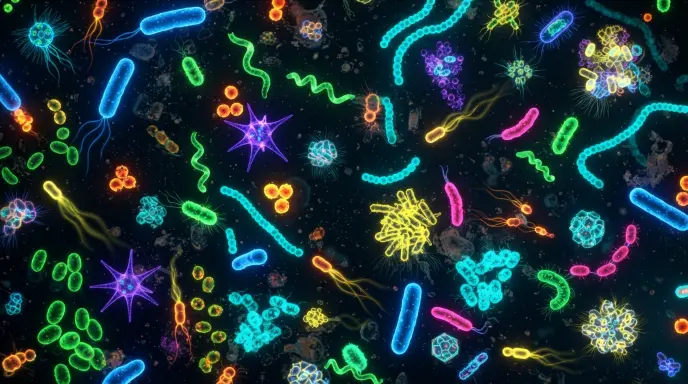
Bacteria are microscopic living organisms found in soil, water, food, plants, animals, and the human body. The word bacteria is already the standard scientific term, but writers sometimes need related words or phrases to avoid repetition or to describe bacteria more precisely.
The best alternative depends on context. Terms such as microorganisms, microbes, and bacterial organisms can sometimes replace bacteria, while words such as pathogens, germs, and flora have narrower or different meanings. This guide explains those differences so you can choose accurate wording in academic, medical, scientific, professional, and everyday writing.
Quick Answer
The closest alternatives to bacteria include microbes, microorganisms, bacterial organisms, bacterial cells, and prokaryotes. However, these terms are not always interchangeable. Microorganisms and microbes include organisms other than bacteria, while pathogens refers specifically to disease-causing organisms. Choose the term based on the biological meaning and context you need.
Quick List of Alternatives to Bacteria

Closest Alternatives
- Microbes
- Microorganisms
- Bacterial organisms
- Bacterial cells
- Prokaryotes
- Microbial organisms
Scientific and Formal Alternatives
- Bacterial species
- Bacterial populations
- Bacterial communities
- Bacterial strains
- Microbial populations
- Microbial communities
- Prokaryotic organisms
- Single-celled microorganisms
Contextual Alternatives
- Pathogens
- Germs
- Infectious agents
- Disease-causing bacteria
- Beneficial bacteria
- Harmful bacteria
- Gut microbes
- Soil microorganisms
- Microflora
- Normal flora
Important Note
Not all of these are exact synonyms. Bacteria is a biological group, while terms such as pathogens, germs, and microorganisms describe bacteria according to their function, public-health context, or broader biological category.
Formal Alternatives to Bacteria

Microorganisms
Meaning:
Microorganisms are organisms that are generally too small to be seen clearly without magnification.
Explanation:
This is a broader term than bacteria. It can include bacteria, fungi, protozoa, and some other microscopic life forms.
Example:
“Researchers examined microorganisms present in the water sample.”
Best Use:
Scientific writing when the exact type of organism is not yet known or when several types are being discussed.
Worst Use:
Avoid it when you specifically mean bacteria and no other microorganisms are involved.
Tone:
Scientific and neutral.
Microbes
Meaning:
Microbes are microscopic organisms or microscopic biological agents.
Explanation:
“Microbe” is a common scientific and general-audience term. It can refer to bacteria but is broader.
Example:
“Some microbes play an important role in digestion.”
Best Use:
Popular science, health education, environmental writing, and general explanations.
Worst Use:
Avoid it when precise taxonomic language is required.
Tone:
Neutral and accessible.
Bacterial Organisms
Meaning:
Organisms belonging to the bacterial domain.
Explanation:
This phrase emphasizes that the organisms being discussed are bacteria rather than another type of microbe.
Example:
“The researchers identified several bacterial organisms in the sample.”
Best Use:
Formal scientific descriptions.
Worst Use:
It can sound unnecessarily wordy when simply saying “bacteria” is clearer.
Tone:
Formal and technical.
Bacterial Cells
Meaning:
Individual cells that make up bacterial organisms.
Explanation:
This term is useful when discussing bacteria at the cellular level.
Example:
“The treatment reduced the number of bacterial cells in the culture.”
Best Use:
Microbiology, cell biology, laboratory reports, and scientific research.
Worst Use:
Do not use it when discussing an entire bacterial population or community.
Tone:
Scientific and precise.
Prokaryotes
Meaning:
Organisms whose cells generally lack a membrane-bound nucleus.
Explanation:
Bacteria are prokaryotes, but the term can also include archaea. Therefore, it is broader than bacteria.
Example:
“Bacteria are prokaryotes with relatively simple cellular structures.”
Best Use:
Biology textbooks and advanced academic writing.
Worst Use:
Avoid using it as a direct replacement for bacteria when archaea might also be included.
Tone:
Technical and academic.
Bacterial Species
Meaning:
Specific groups of bacteria classified as species.
Explanation:
This phrase is narrower than the general word bacteria.
Example:
“Several bacterial species were detected in the sample.”
Best Use:
Research papers, laboratory reports, and scientific descriptions.
Worst Use:
Do not use it when you mean bacteria generally.
Tone:
Formal and scientific.
Bacterial Strains
Meaning:
Distinct genetic variants or lineages within a bacterial species.
Explanation:
A strain is more specific than a species.
Example:
“The laboratory tested several bacterial strains for resistance.”
Best Use:
Microbiology and medical research.
Worst Use:
Avoid it when discussing unrelated bacteria broadly.
Tone:
Technical.
Bacterial Populations
Meaning:
Groups of bacteria occupying a particular environment or sample.
Explanation:
This phrase focuses on the quantity and collective presence of bacteria.
Example:
“Temperature changes affected bacterial populations in the soil.”
Best Use:
Ecology, microbiology, environmental science, and research.
Worst Use:
It is unnecessary if you simply need to name bacteria.
Tone:
Scientific and analytical.
Bacterial Communities
Meaning:
Groups of different bacterial organisms living and interacting in the same environment.
Explanation:
This term emphasizes relationships among bacteria rather than individual organisms.
Example:
“The study examined bacterial communities in the human gut.”
Best Use:
Microbial ecology and environmental research.
Worst Use:
Avoid it when discussing a single bacterial species.
Tone:
Scientific and precise.
Microbial Populations
Meaning:
Groups of microbes within a particular environment.
Explanation:
The term can include bacteria and other microorganisms.
Example:
“The chemical affected microbial populations in the water.”
Best Use:
Environmental and biological research.
Worst Use:
Avoid it if the study specifically concerns bacteria alone.
Tone:
Formal and scientific.
Semi-Formal and Neutral Alternatives
Microbes
“Microbes” is one of the most natural alternatives in general writing.
Example:
“Certain microbes help break down organic material.”
Best use: Educational articles and general explanations.
Worst use: Highly technical taxonomy.
Tone: Neutral and accessible.
Germs
“Germs” is a familiar everyday term for microorganisms associated with illness.
Example:
“Washing your hands helps remove germs from your hands.”
Best use: Public-health education and casual communication.
Worst use: Scientific writing where precise classification matters.
Tone: Casual and familiar.
Pathogens
A pathogen is an organism or other infectious agent capable of causing disease.
Example:
“Some bacterial pathogens can cause serious infections.”
Best use: Medical and health contexts.
Worst use: Do not use it for harmless or beneficial bacteria.
Tone: Medical and technical.
Infectious Agents
This phrase describes organisms or agents capable of causing infection.
Example:
“Researchers studied infectious agents associated with contaminated water.”
Best use: Medical, public-health, and laboratory writing.
Worst use: Avoid it when discussing bacteria that are not infectious.
Tone: Formal and professional.
Beneficial Bacteria
This phrase specifically describes bacteria associated with useful effects.
Example:
“Beneficial bacteria contribute to healthy microbial communities in the digestive system.”
Best use: Health education and microbiology.
Worst use: Do not use it as a general replacement for all bacteria.
Tone: Neutral and explanatory.
Harmful Bacteria
This describes bacteria that can cause disease, contamination, or other unwanted effects.
Example:
“Proper food handling helps limit the growth of harmful bacteria.”
Best use: Food safety and health education.
Worst use: Avoid using it for bacteria that are harmless or useful.
Tone: Clear and accessible.
Gut Microbes
This phrase refers to microorganisms living in the digestive tract.
Example:
“Diet can influence the composition of gut microbes.”
Best use: Health, nutrition, and biological writing.
Worst use: It should not replace bacteria when discussing bacteria outside the digestive system.
Tone: Neutral and modern.
Microflora
“Microflora” has historically been used to describe microorganisms living in a particular environment, especially the body.
Example:
“Changes in intestinal microflora have been studied in relation to diet.”
Best use: Older or established biological terminology.
Worst use: In current scientific writing, more precise terms such as microbiota are often preferable.
Tone: Technical and somewhat traditional.
Microbiota
Microbiota refers to the collection of microorganisms living in a particular environment or habitat.
Example:
“Researchers analyzed the intestinal microbiota.”
Best use: Modern scientific and medical writing.
Worst use: Do not use it if you specifically mean bacteria rather than the entire microbial community.
Tone: Scientific and precise.
Informal and Casual Alternatives
Germs
“Germs” is the most common casual alternative, especially when discussing illness or cleanliness.
Example:
“Wash your hands to help keep germs away.”
It works well in everyday conversation but is too vague for most scientific papers.
Bugs
“Bugs” can sometimes be used informally to describe germs or microorganisms, especially in casual speech.
Example:
“There are some nasty bugs going around.”
However, bug is highly informal and can also mean an insect or a software error.
Little Microbes
This playful phrase may appear in educational or conversational writing.
Example:
“Tiny microbes help break down organic material.”
It is descriptive rather than a technical synonym.
True Synonyms vs. Contextual Alternatives
The distinction matters because bacteria have a specific biological meaning.
| Type | What It Means | Can It Replace “Bacteria”? |
|---|---|---|
| True synonym | A term with essentially the same meaning | Rarely; scientific alternatives are usually more specific |
| Near synonym | Similar meaning but slightly different scope | Sometimes |
| Contextual alternative | Works in a particular situation | Yes, when the context fits |
| Broader expression | Includes bacteria plus other organisms | Only when broader meaning is intended |
| Narrower expression | Refers to a specific type or group of bacteria | Only when that narrower meaning is intended |
Why “Microorganism” Is Not an Exact Synonym
A microorganism can be a bacterium, fungus, protozoan, or another microscopic organism. Therefore, replacing bacteria with microorganisms can make a sentence less precise.
Why “Pathogen” Is Not an Exact Synonym
Some bacteria cause disease, but many bacteria do not. The word pathogen identifies an ability to cause disease, not a biological classification.
Why “Germ” Is Different
“Germ” is an everyday term rather than a precise scientific classification. It usually refers to microorganisms associated with illness.
Industry-Specific Usage
Bacteria in Business Writing
Business writing rarely needs a direct synonym unless the company operates in healthcare, food production, biotechnology, agriculture, or another technical field.
Instead of repeatedly using “bacteria,” writers can use context-specific terms such as microbial contamination, bacterial contamination, or bacterial growth.
Example:
“Improved sanitation procedures can reduce bacterial contamination during production.”
Bacteria in Corporate Communication
Corporate reports should prioritize accuracy over variation.
Example:
“Testing identified bacterial contamination in one production area.”
Here, bacterial contamination is more useful than replacing bacteria with a vague word such as “germs.”
Bacteria in Academic Writing
Academic writing requires the greatest precision.
Useful terms include:
- Bacterial species
- Bacterial strains
- Bacterial populations
- Bacterial communities
- Microbiota
- Microbial communities
- Prokaryotic organisms
Example:
“The researchers compared bacterial communities across three environmental samples.”
Avoid using “germs” in a formal research paper unless you are discussing the term itself.
Bacteria in Customer Service
Customer-service writing should be simple and understandable.
Example:
“Our cleaning procedure helps reduce harmful bacteria on frequently touched surfaces.”
“Germs” may be appropriate for general consumers, while “bacterial contamination” may be better when discussing a specific food or product-safety issue.
Bacteria in Legal Writing
Legal and regulatory documents should use the most precise available terminology.
A document discussing food safety, contamination, or public health may distinguish among:
- Bacteria
- Pathogens
- Bacterial contamination
- Infectious agents
- Specific bacterial species
A broader term such as “germs” can create unnecessary ambiguity.
Bacteria in Email Communication
Professional emails should generally use bacteria, bacterial contamination, or another specific term rather than casual words such as “bugs.”
Example:
“The laboratory results indicate the presence of bacterial contamination in the sample.”
That wording is clearer than saying:
“The sample has some germs in it.”
Examples of Professional Emails
Email 1: Laboratory Update
Subject: Bacterial Testing Results
Hello Dr. Adams,
The initial testing has been completed, and the sample showed evidence of bacterial growth. We are conducting additional analysis to identify the organisms and confirm the results.
I will share the updated findings once the testing is complete.
Best,
Jordan
Email 2: Food Safety Notice
Subject: Food Safety Testing Update
Hello Team,
Routine testing identified bacterial contamination in one sample. The affected material has been isolated while additional testing is conducted.
Please continue following the current handling and sanitation procedures.
Best,
Maria
Email 3: Academic Communication
Subject: Microbial Analysis for the Research Project
Dear Professor Lee,
I have completed the initial analysis of the bacterial populations in the collected samples. The results suggest that the microbial communities differ between the two environments.
I will include the detailed findings in the final report.
Best regards,
Alex
Email 4: Customer Service
Subject: Your Product Safety Question
Hello,
Thank you for contacting us. Our recommended cleaning procedure is designed to help reduce harmful bacteria and other microorganisms that may be present on the surface.
Please follow the care instructions provided with the product.
Kind regards,
Customer Support
Email 5: Research Collaboration
Subject: Bacterial Strain Analysis
Hello Dr. Patel,
We have completed the first stage of the bacterial strain analysis. The samples are now being compared to determine whether the observed differences are consistent across the group.
I will send the detailed results after the comparison is complete.
Best,
Taylor
Mini-Dialogues
Workplace
Person A: What did the laboratory find?
Person B: The sample showed bacterial growth, so they are doing additional testing.
Classroom
Person A: Are all microbes bacteria?
Person B: No. Microbes can include bacteria and several other types of microscopic organisms.
Customer Service
Person A: Does the cleaning process remove germs?
Person B: It is designed to reduce microorganisms, including many types of bacteria.
Casual Conversation
Person A: Why do we have to wash our hands so often?
Person B: It helps remove germs and other contaminants from your hands.
Professional Discussion
Person A: Are these organisms harmful?
Person B: Not necessarily. Some bacteria are harmless or beneficial, while others can cause disease.
How to Replace “Bacteria” in a Sentence
Example 1
Original:
“Bacteria were found in the water.”
Alternative:
“Microorganisms were found in the water.”
Why it works:
Use this only when the sample may contain microorganisms other than bacteria.
Example 2
Original:
“Some bacteria cause disease.”
Alternative:
“Some bacterial pathogens cause disease.”
Why it works:
“Pathogens” emphasizes the disease-causing group rather than bacteria in general.
Example 3
Original:
“Bacteria live in the soil.”
Alternative:
“Microbial communities live in the soil.”
Why it works:
The alternative focuses on communities of microorganisms rather than individual bacteria.
Example 4
Original:
“The researchers studied bacteria in the sample.”
Alternative:
“The researchers studied bacterial populations in the sample.”
Why it works:
The replacement emphasizes groups of bacteria.
Example 5
Original:
“Bacteria were detected on the surface.”
Alternative:
“Bacterial contamination was detected on the surface.”
Why it works:
This wording emphasizes the contamination rather than merely the presence of bacterial cells.
Example 6
Original:
“Bacteria in the digestive system can affect health.”
Alternative:
“Gut microbes can influence health.”
Why it works:
“Gut microbes” is broader and includes microorganisms other than bacteria.
Example 7
Original:
“The bacteria became resistant to the treatment.”
Alternative:
“The bacterial strain developed resistance to the treatment.”
Why it works:
“Strain” provides a more specific biological reference.
Example 8
Original:
“Wash your hands to remove bacteria.”
Alternative:
“Wash your hands to help remove germs.”
Why it works:
“Germs” is more familiar for everyday health communication but less precise scientifically.
Comparison of Common Alternatives
| Phrase | Tone | Meaning / Scope | Best Use | Example |
|---|---|---|---|---|
| Bacteria | Neutral/scientific | Specific biological group | General and scientific writing | “Bacteria were detected.” |
| Microorganisms | Formal | Broader than bacteria | Science and education | “Microorganisms were examined.” |
| Microbes | Neutral | Broad microscopic life | General science | “Microbes inhabit the soil.” |
| Bacterial cells | Technical | Individual bacterial cells | Laboratory writing | “Bacterial cells were counted.” |
| Bacterial species | Scientific | Specific bacterial species | Research | “Several bacterial species were identified.” |
| Bacterial strains | Technical | Variants within bacterial groups | Microbiology | “The strains were compared.” |
| Pathogens | Medical | Disease-causing agents | Health and medicine | “Some pathogens cause infection.” |
| Germs | Casual | Illness-associated microbes | Everyday communication | “Wash away germs.” |
| Microbiota | Scientific | Microorganisms in a habitat | Medical research | “Gut microbiota were analyzed.” |
| Prokaryotes | Technical | Bacteria and archaea | Biology | “Bacteria are prokaryotes.” |
Which Alternative Should You Choose?
For Formal Writing
Use bacteria, bacterial organisms, bacterial species, or bacterial populations, depending on what you mean.
For Business Communication
Use bacteria, bacterial contamination, or microorganisms when the broader category is relevant.
For Academic Writing
Prefer precise scientific terms such as bacterial species, bacterial strains, bacterial populations, or microbial communities.
For Legal Writing
Use the exact scientific or regulatory term required by the document. Avoid vague alternatives such as “germs.”
For Professional Email
Use bacteria or a specific phrase such as bacterial contamination.
For Everyday Conversation
Germs or microbes can sound more natural, depending on the context.
Grammar and Usage Guide
Is “Bacteria” Singular or Plural?
Bacteria is traditionally the plural form of bacterium.
- Singular: “A bacterium was identified.”
- Plural: “Several bacteria were identified.”
In ordinary English, however, people commonly use “bacteria” as a general mass noun:
“Bacteria can survive in many environments.”
Should You Say “Bacteria Is” or “Bacteria Are”?
When referring to bacteria as individual organisms or a group, bacteria are is the standard grammatical choice.
Correct:
“Bacteria are present in the sample.”
For a singular organism:
Correct:
“A bacterium is present in the sample.”
Bacterial vs. Bacteria
Bacteria is a noun.
Bacterial is an adjective.
Example:
“Bacteria were detected.”
“Bacterial growth was detected.”
Do not use “bacteria” where an adjective is required.
Bacteria vs. Microbiota
Bacteria refers specifically to bacteria.
Microbiota refers to the community of microorganisms living in a particular environment.
Therefore, these words should not automatically replace each other.
Bacteria vs. Microbiome
A microbiome generally refers to the microbial community and its associated genetic material and environment, depending on the scientific context.
It is not simply another word for bacteria.
Common Mistakes to Avoid
1. Calling Every Microorganism Bacteria
Not every microorganism is a bacterium.
Better: Use “microorganisms” when you mean a broader group.
2. Calling All Bacteria Pathogens
Many bacteria do not cause disease.
Better: Use “pathogenic bacteria” or “bacterial pathogens” when disease-causing bacteria are specifically meant.
3. Using “Germs” in Scientific Papers
“Germs” is understandable but imprecise.
Better: Identify the organism or biological category accurately.
4. Using “Microbes” When Precision Matters
“Microbes” can include several kinds of microscopic organisms.
Better: Say “bacteria” when bacteria are specifically being discussed.
5. Confusing Bacteria With Bacterial
“Bacteria” names the organisms; “bacterial” describes something related to bacteria.
Correct: “Bacterial infection.”
Incorrect: “Bacteria infection.”
6. Using “Bacterial Strain” for a Whole Species
A strain is a narrower biological grouping.
Better: Use “bacterial species” when referring to a species and “strain” when discussing a specific lineage or variant.
7. Treating “Germs” as a Scientific Classification
Germ is an everyday term, not a precise taxonomic category.
8. Assuming “Beneficial Bacteria” Means All Bacteria
Some bacteria are useful, some are harmless, and some can cause disease.
Better: Use a descriptive phrase that matches the particular group.
When Not to Use the Original Word “Bacteria”
Sometimes a more specific expression makes the sentence clearer.
When You Mean Disease-Causing Organisms
Use bacterial pathogens if the ability to cause disease is important.
When You Mean a Broader Group
Use microorganisms or microbes if bacteria are only one part of the group.
When You Mean a Community
Use bacterial community or microbial community when multiple organisms living together are being discussed.
When You Mean Individual Cells
Use bacterial cells in laboratory and cellular contexts.
When You Mean Specific Variants
Use bacterial strains when discussing distinct variants within a species.
When Everyday Readers Need Simpler Language
“Germs” may be easier to understand in public-facing health content, although it is less precise.
When “Bacteria” Is Actually Better
Do not replace the word simply to avoid repetition. If bacteria is the most accurate and clearest term, repeating it is better than using an inaccurate synonym.
Advanced Writer Tips
Tone Control
Use bacteria for neutral and scientific writing, microorganisms for broader formal descriptions, and germs for simple public-facing communication.
Professional Email Etiquette
Choose precise wording rather than trying to sound sophisticated.
Instead of:
“Various microbial agents were observed in the product.”
Say:
“Bacterial contamination was detected in the product.”
The second sentence may be clearer if bacteria are specifically what was detected.
Politeness
In health and customer-service writing, familiar terms can make technical information easier to understand.
For example:
“Please clean the surface to reduce germs.”
is more accessible than:
“Please decontaminate the surface to reduce microbial populations.”
Context Alignment
The same organism can be described differently depending on the purpose.
A scientist may write bacterial strain.
A teacher may write microbe.
A public-health campaign may write germs.
A medical researcher may write bacterial pathogen.
Precision
Ask what you are actually describing:
- The organism itself → bacterium/bacteria
- A group → bacterial population
- A variant → bacterial strain
- Disease-causing bacteria → bacterial pathogen
- A broad microbial group → microorganisms
- A microbial community → microbiota or microbial community
Readability
Do not replace “bacteria” with longer technical phrases just for variety. Good writing prioritizes accuracy and clarity over avoiding repetition.
Related Questions About Bacteria Alternatives
What is another way to say bacteria?
Depending on the context, you can use microbes, microorganisms, bacterial cells, bacterial organisms, or bacterial species. However, these terms have different scopes, so the best choice depends on whether you mean bacteria generally, individual cells, specific species, or a broader group of microorganisms.
What is a professional alternative to bacteria?
Bacteria itself is already professional and scientifically appropriate. In a specific context, alternatives such as bacterial species, bacterial populations, bacterial strains, or bacterial contamination may provide greater precision.
What is a formal alternative to bacteria?
There is no single perfect formal replacement. Terms such as bacterial organisms, bacterial species, bacterial populations, and prokaryotic organisms can work in formal writing, but each has a different scope.
Can I use microbes instead of bacteria?
Sometimes. Microbes is broader than bacteria and may include other microscopic organisms. Use it when the wider category is appropriate. If you specifically mean bacteria, keeping the word bacteria is more precise.
Is bacteria a formal word?
Yes. Bacteria is the standard scientific plural form of bacterium and is appropriate in academic, medical, laboratory, and professional writing.
Is germs a synonym for bacteria?
“Germs” is a loose everyday term that can refer to microorganisms associated with disease. Some germs are bacteria, but the terms are not exact synonyms. “Germs” is suitable for casual or public-facing communication, while “bacteria” is more precise.
What is the difference between bacteria and microorganisms?
Bacteria are one type of microorganism. Microorganism is a broader category that can include bacteria, fungi, protozoa, and other microscopic organisms. Therefore, “microorganism” cannot always replace “bacteria” without changing the meaning.
FAQs
What are the closest synonyms for bacteria?
The closest commonly used alternatives are microbes, microorganisms, bacterial organisms, and bacterial cells. However, none is a perfect replacement in every sentence because each term has a different scope or emphasis.
What is the scientific word for bacteria?
The scientific word is simply bacteria, which is the plural form of bacterium. More specific scientific expressions include bacterial species, bacterial strains, bacterial populations, and bacterial communities.
Can “microorganisms” replace “bacteria”?
Yes, when you are intentionally referring to a broader group of microscopic organisms. If the sentence specifically concerns bacteria, however, replacing “bacteria” with “microorganisms” may make the statement less precise.
Are bacteria and germs the same thing?
No. “Germs” is a general everyday term often associated with microorganisms that can cause illness. Bacteria are a specific biological group, and only some bacteria are associated with disease.
Is “pathogen” another word for bacteria?
No. A pathogen is an organism or infectious agent capable of causing disease. Some bacteria are pathogens, but many bacteria are not. Therefore, “pathogen” is a contextual term rather than a direct synonym.
What is the plural of bacterium?
The traditional scientific plural is bacteria. For example, “One bacterium was identified” becomes “Several bacteria were identified.”
What word should I use instead of bacteria in academic writing?
Usually, keep bacteria unless another term provides greater precision. Depending on the context, bacterial species, bacterial strains, bacterial populations, or bacterial communities may communicate the intended meaning more accurately.
Key Takeaways
- Bacteria is already the standard and professional scientific term.
- Microbes and microorganisms are broader than bacteria.
- Pathogens refers to disease-causing organisms, not bacteria in general.
- Bacterial species, strains, cells, and populations provide more specific meanings.
- Choose alternatives for accuracy and context rather than simply avoiding repetition.
Conclusion
Finding synonyms for bacteria requires more than replacing one word with another. The most accurate choice depends on what you are describing. Microbes and microorganisms work when a broader category is intended, while bacterial cells, species, strains, and populations provide greater scientific precision. Terms such as pathogens, germs, and beneficial bacteria are useful in specific contexts but should not be treated as exact synonyms.
For academic and scientific writing, precision should come first. For public-facing content, simpler words such as microbes or germs may be easier for readers to understand. When in doubt, bacteria is often the clearest and most accurate choice. Good synonym use is not about finding the fanciest replacement; it is about selecting the word that communicates the intended meaning naturally and correctly.
